


11+:
Live football community platform designed for real-time fan interaction during and beyond matches.
Real-time UX
B2C · Community
Role
Product Designer
Team
1 Product Designer
1 Product Manager
2 Engineers
1 QA
Responsibilities
End-to-end UX Design
Timeline
3 Months
TLDR
Challenge
Adding more features didn’t increase participation. Conversations remained fragmented across live moments, activity was difficult to track, and engagement dropped after each interaction.
Insight
This wasn’t a motivation problem.
Engagement broke when context disappeared, activity became invisible, and participation had no ongoing value.

My Role
Design a system where interaction persists beyond isolated match moments.
+
Reaction
per match
min
longer session
duration
x
More sustained
peer interaction

Process
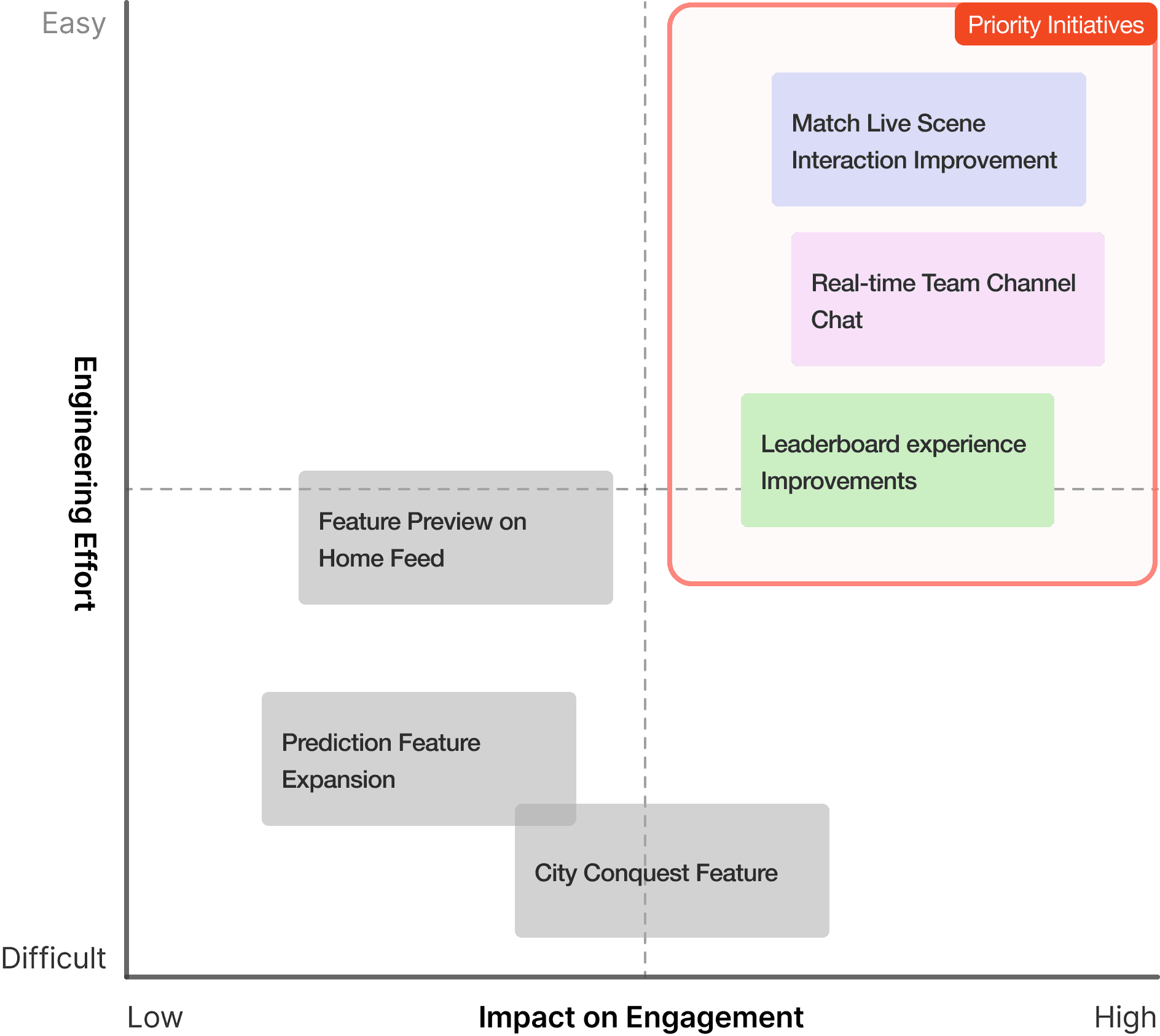
Worked in rapid 1-week cycles with PM and engineers to test how users moved between live and community interactions, validating which changes improved continuity versus those that added surface complexity.

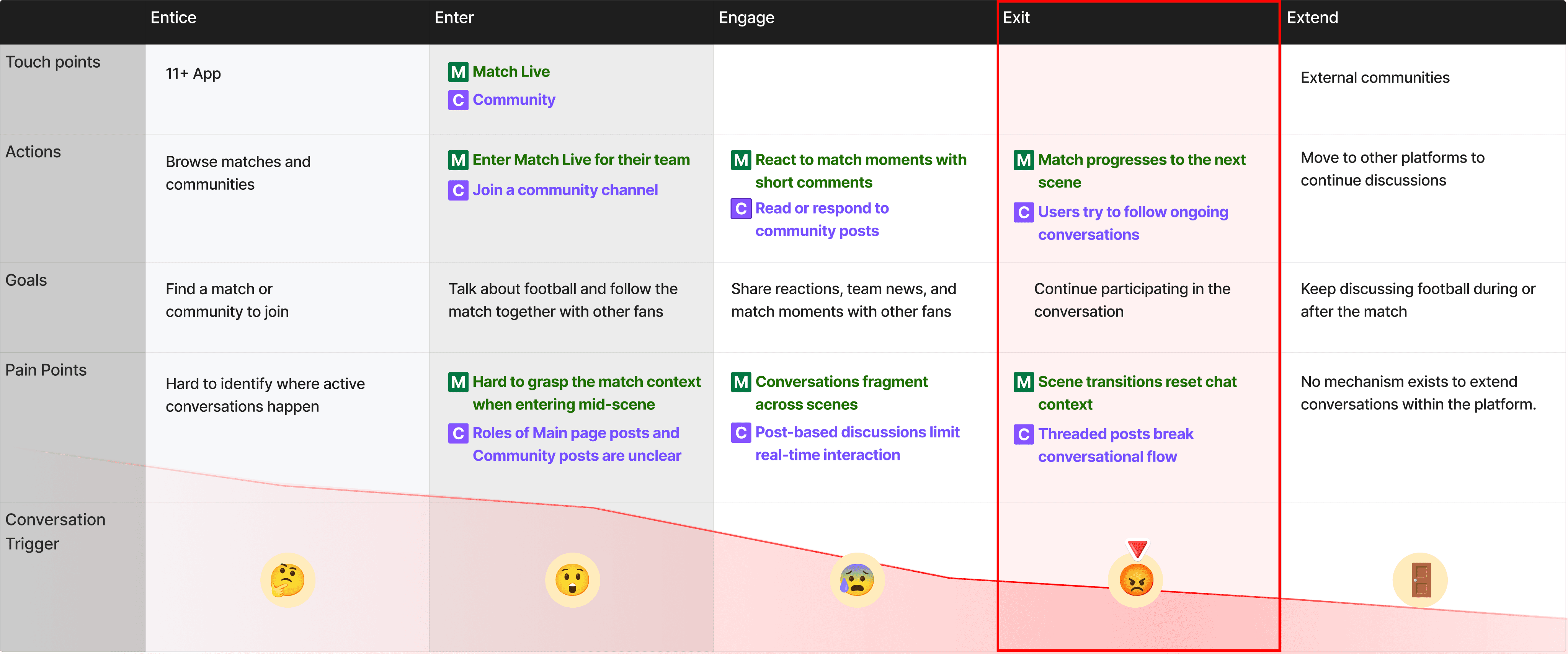
Structural Diagnosis
Participation broke when:
Context disappeared across scenes
Activity was not visible
There was no reason to return
FInal Outcome
➊ Continuity
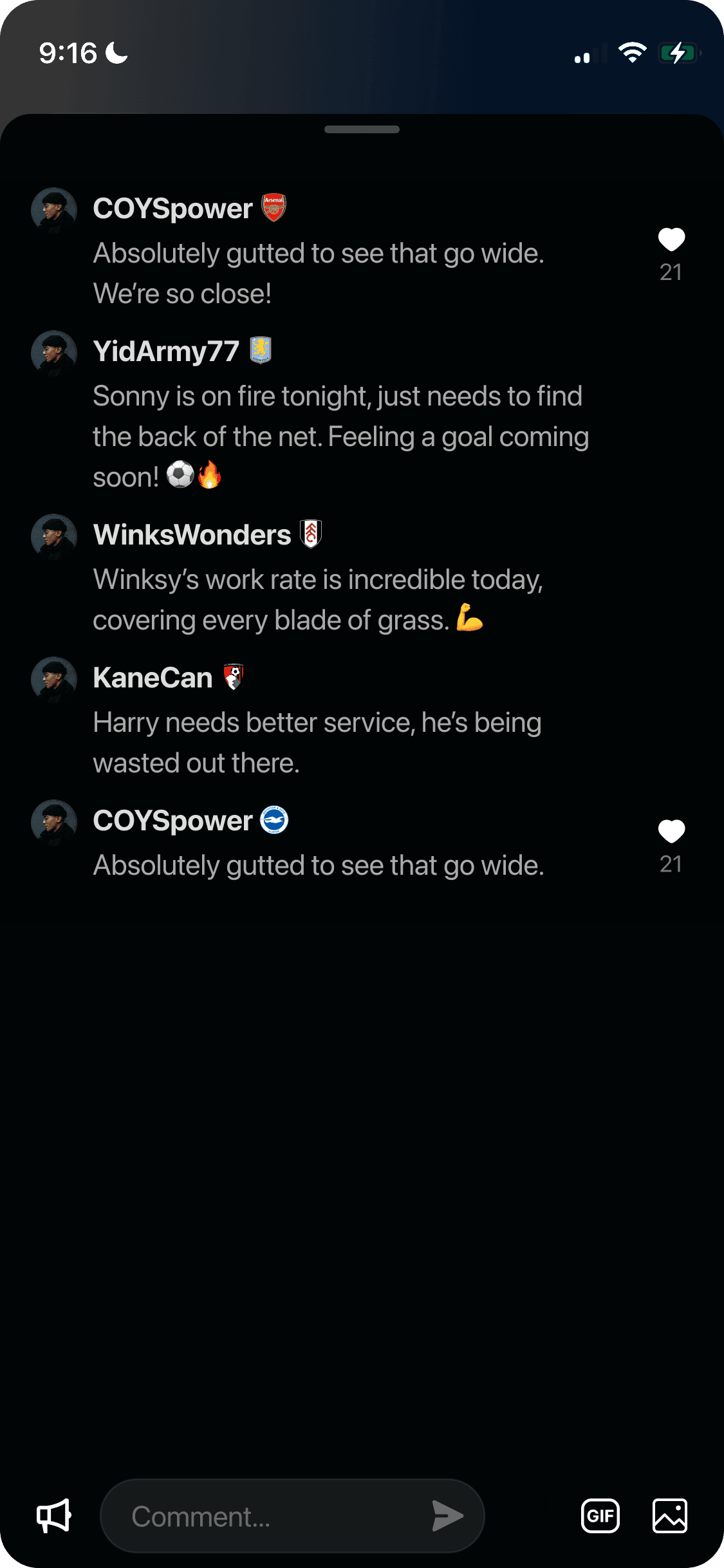
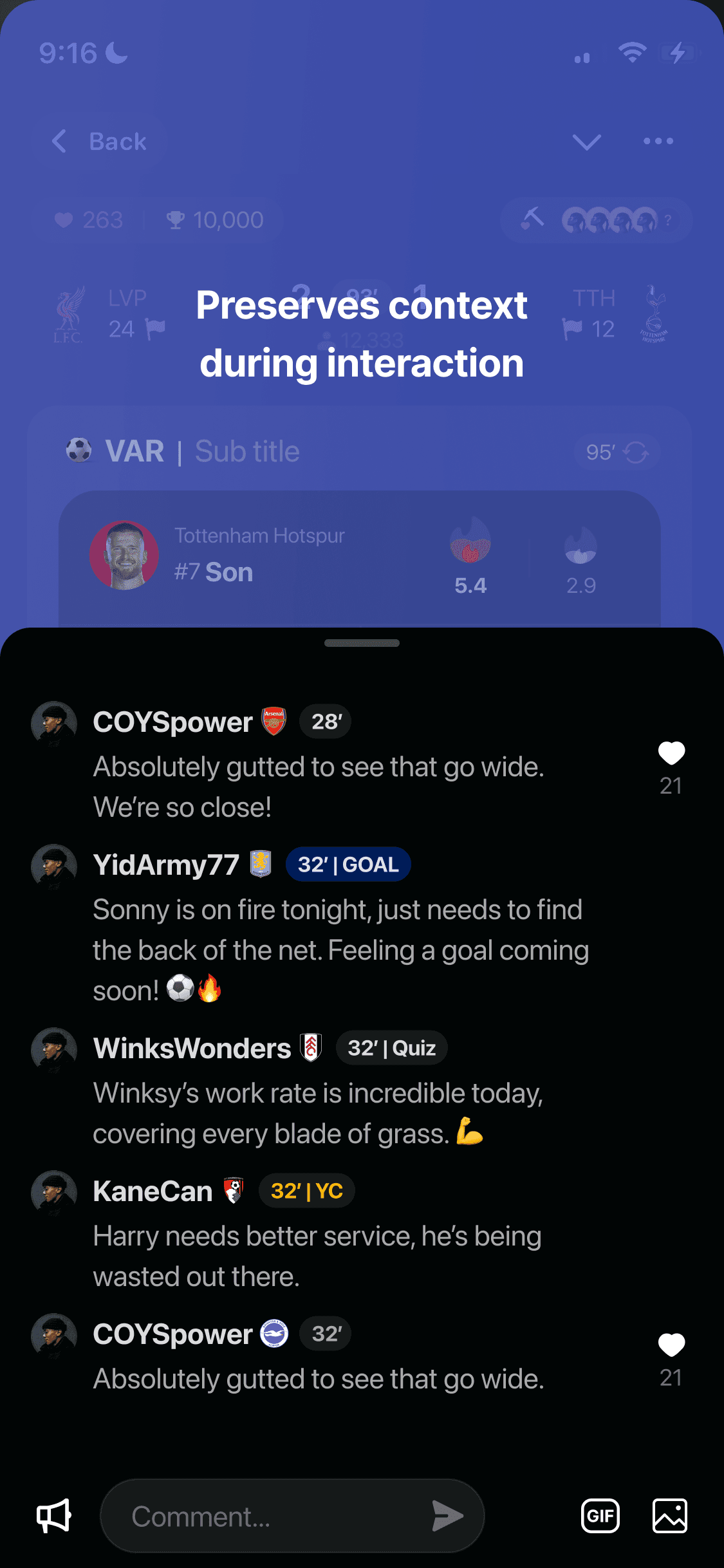
A unified thread with deeper previews and auto-play keeps conversations continuous across live moments so users stay focused on the match with full context.
Before
After
Conversation persists seamlessly
across scenes
Users could interact with other fans during the match without losing context.
Before
After
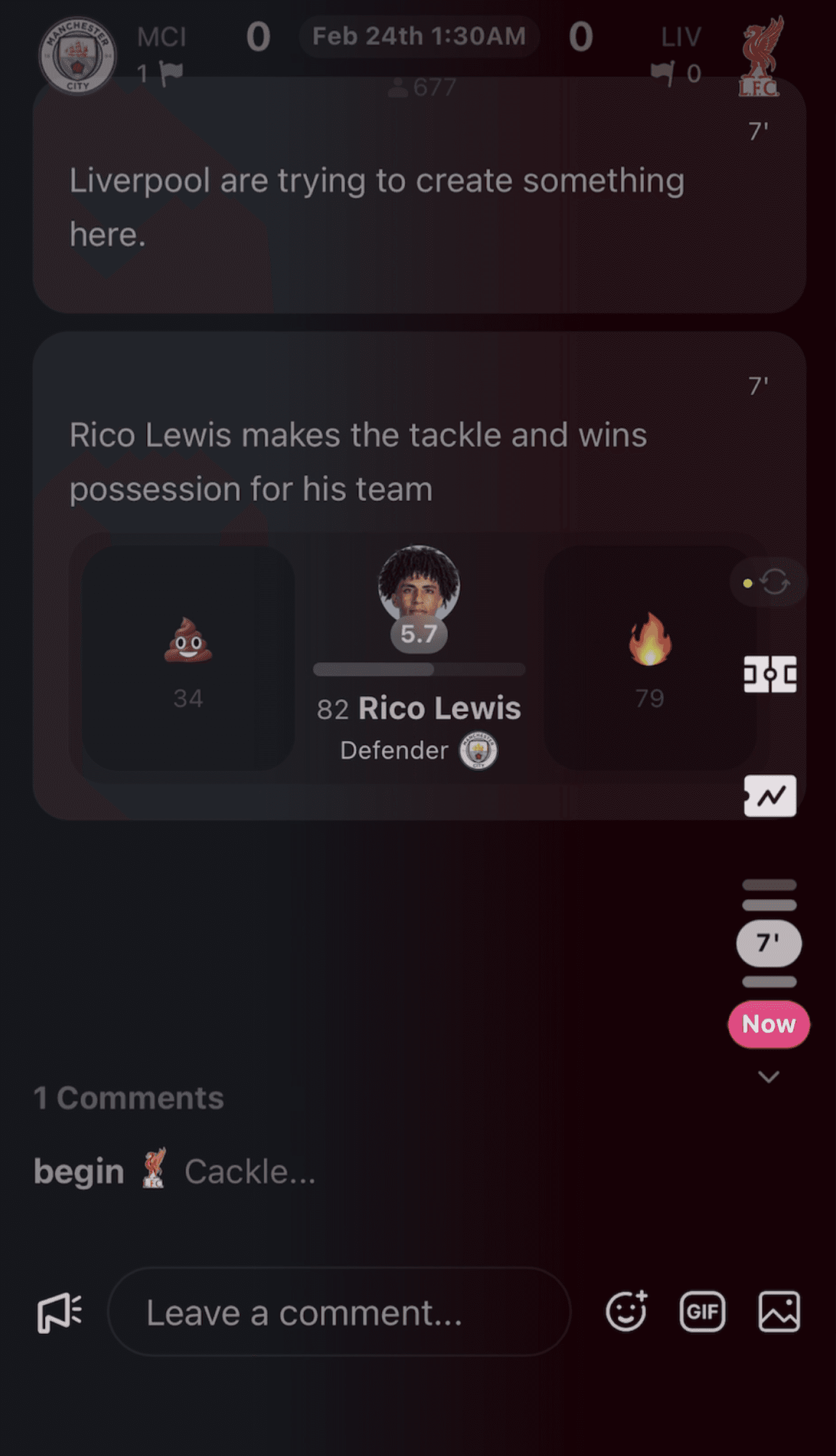
Context is blocked by full-screen chat
Match context stays visible while chatting.
➋ Persistence
I created a shared team space where fans connect in real time, chat like teammates, and build stronger, lasting engagement beyond the match.
Before
After
Interaction was limited to isolated posts
A shared team space enabled real-time,
chat-like interaction among fans
➌ Visibility
I surfaced individual contributions within each team, making participation visible, recognizable, and socially motivating.
Before
After
What I learned
This project reshaped how I approach design in complex systems. Rather than focusing on adding features, I focused on designing the conditions that enable behavior to emerge.
Even within fast-paced environments, establishing structural clarity proved essential to stabilizing and scaling user participation. I now approach product problems by first identifying structural conditions, rather than surface-level feature gaps.
If I had more time, I would validate how these participation patterns evolve across long-term retention and multi-match behavior.